
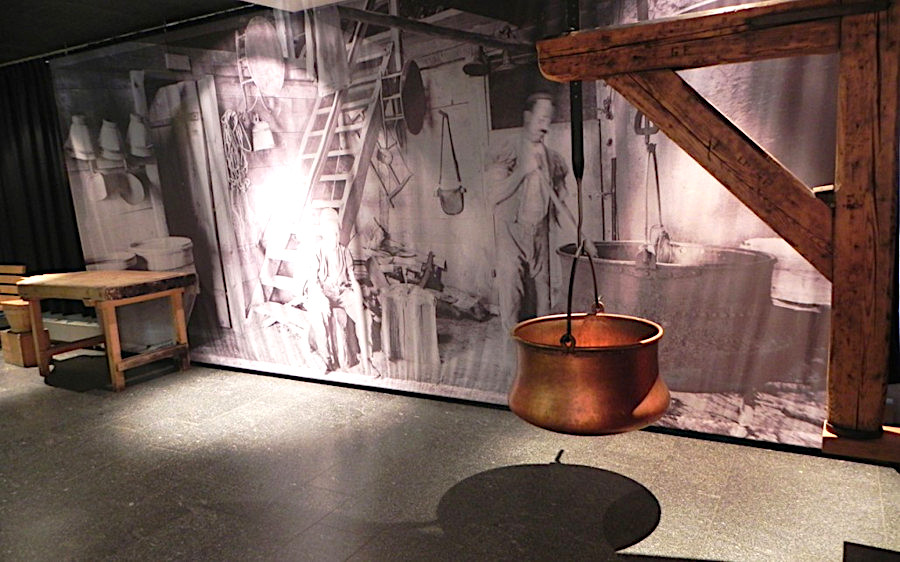
Origins of cheese
Cheese was not invented in Switzerland!
No-one knows exactly when or where cheese was invented. It is mentioned in the Old Testament in texts; it could date back 3,500 years.
Perhaps a merchant travelling through the desert 5,000 years ago made the discovery by accident when the milk he was transporting in a bag made of a sheep's stomach reacted with the natural rennet in the stomach lining and was churned into cheese by constant jogging.
in 1st Century AD Roman historian Pliny the Elder, wrote of the "Caseus Helveticus" the cheese of the Helvetians”, one of the tribes living in Switzerland at the time.

Around the 15th Century - record of the first appearance in Switzerland of the technique of using rennet from the stomach lining of calves to make hard cheese allowing cheese to be stored for lengthy periods.
Monks who looked after the hostels at the top of some of the major passes, snowed in for part of the year, kept large stocks of it for their guests.
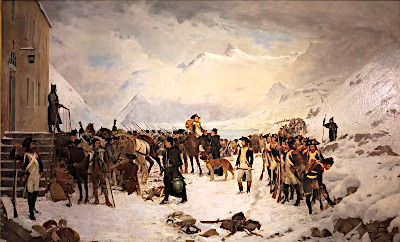
In May 1800 Napoleon stayed at the hostel on Great St Bernard pass with his 40,000 troops; they consumed 1½ tonnes of the monks’ cheese. The monks had to wait 50 years before they saw any payment, and it was only in 1984 that the then French President, François Mitterrand, made a token payment for the balance still outstanding.
Swiss Cheese and Swiss cheesemakers go abroad
Once it could be stored, Swiss cheese soon became a valuable trading commodity.
The opening of the Gotthard Pass in the 13th century and the large-scale emigration of young people to escape work in the fields or to serve in foreign armies helped spread Swiss products far beyond Switzerland's borders.
In the 15th century, the Catholic Church, by loosening fasting laws in the regions north of the Alps to allow the consumption of dairy products during Lent and church holidays, boosted the demand for Swiss cheese and it became highly coveted in Italy, French Flanders, the Nordic countries and Britain.
By the 18th C it was being sold all over Europe - even to the detriment of the local market, if a 1793 travel guide is to be believed:
“It is rather strange that cheese and butter should be so bad in inns throughout Switzerland. Even in the regions which produce a lot of milk, it is hard to get good cream or fresh butter, because the locals find it more profitable to make cheese out of their milk.”
Switzerland soon exported not only cheese but cheesemakers too.
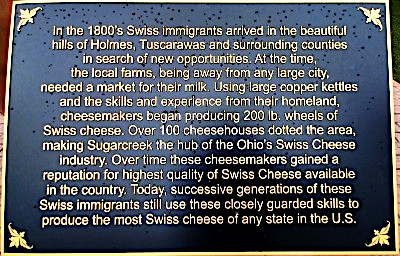
Swiss cheesemakers were prized immigrants in France, and many of the thousands of Swiss emigrants who settled in the USA (particularly in Wisconsin) in the 19th century were dairymen, some of whose descendents are still making cheese there today - the Ohio-based Rothenbühler cheese factory is now one of the five largest cheese producers in the USA.
At the end of the 19th century, some 300 Swiss cheesemakers - most of them specialising in Emmental cheese – left Switzerland for Russia and Eastern Europe because they could no longer find work in their home cantons. A number of them settled in East Prussia around the town of Tilsit where the population had been decimated by the plague. The first Tilsiter cheese was made in 1822. In 1893, two Swiss cheesemakers travelling in East Prussia sampled the Tilsiter and decided to bring this cheese variety back home to Switzerland.
The descendants of many of the original Swiss cheesemakers who emigrated to Russia returned to Switzerland in 1917 when the Russian Revolution broke out.
See also