
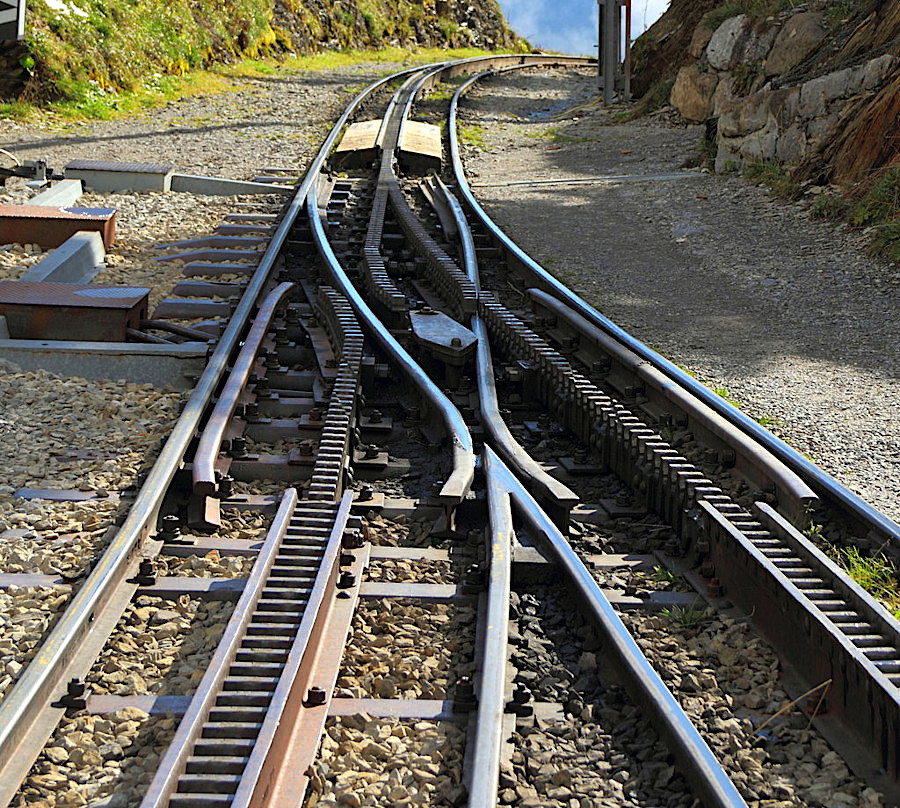
The first cogwheel trains

1st cogwheel train in WORLD (1867) = Mt Washington, New Hampshire

1st cogwheel train in EUROPE (1871) = Mt Rigi-Vitznau, Switzerland

Steepest cogwheel in world (1889) = Mt Pilatus, Switzerland (48% gradient)
There were 7 cogwheel rail systems invented
5 of them came from Switzerland
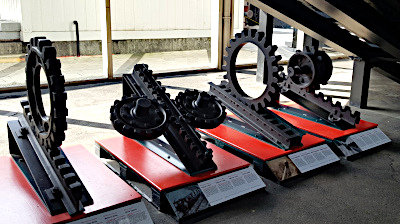
Marsh Rack & Pinion System - Mt Washington (1867)
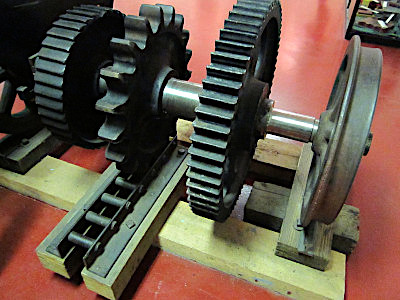
World's 1st successful rack railway - developed by Sylvester Marsh.
1867 patent for practical rack where gear teeth take form of rollers arranged like rungs of a ladder between 2 L-shaped wrought-iron rails.
Pinion wheels on locomotives have deep teeth to ensure at least 2 teeth are engaged with rack at all times - helps reduce possibility of pinions riding up and out of rack.
Riggenbach System - Mt Rigi (1871)
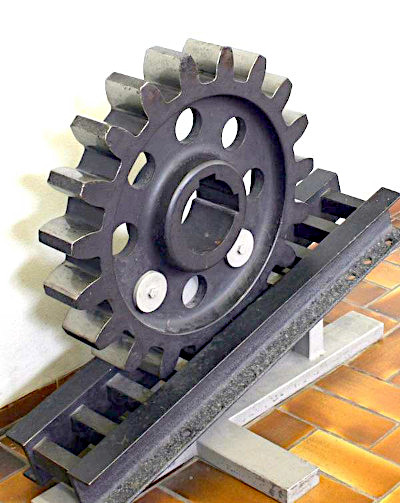
Niklaus Riggenbach worked at about the same time as, but independently from Marsh.
1863 - Riggenbach granted a French patent.
Eager to boost tourism in Switzerland, government commissioned Riggenbach to build rack railway up Mount Rigi - opened 1871.
Riggenbach's system is similar in design to the Marsh system, using ladder rack, formed of steel plates connected by round or square rods at regular intervals. Its drawback is its fixed ladder rack which is more complex and expensive to build than other systems.
Used on Mt Rigi railways.
Abt System (1885)
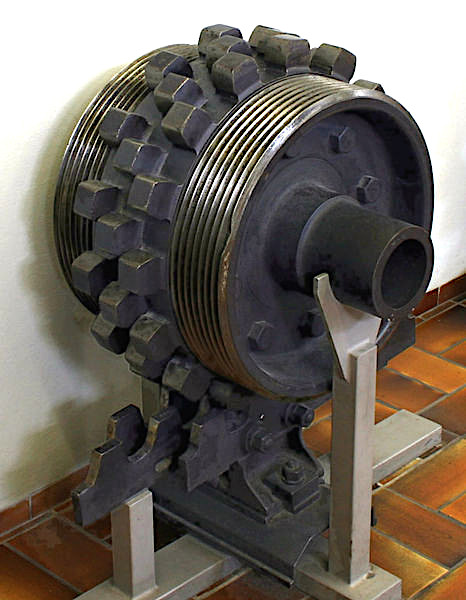
Devised by Carl Roman Abt: he formerly worked for Nikolas Riggenbach.
Abt wanted to improve the limitations of Riggenbach's system, especially the costs of manufacture and maintenance, and complex switches.
1882 - Abt designed new rack using solid bars with vertical teeth machined into them. 2 or 3 bars are mounted centrally between rails, with teeth offset.
Use of multiple bars with offset teeth ensures pinions on locomotive driving wheels are constantly engaged with rack.
Abt system is cheaper to build as it requires lower weight of rack over a given length, but is less resistant to wear.
Max gradient possible is 1 in 4 (25%).
Most widely used rack railway system – eg. on Gornergrat Railway
Locher System (1889)
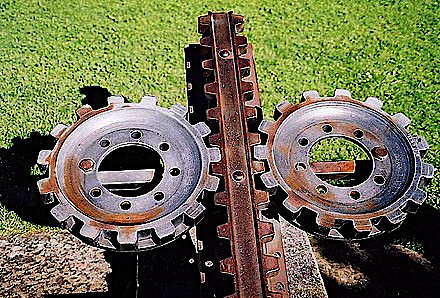
Invented by Swiss Eduard Locher.
It has symmetrical horizontal gear teeth cut in sides of rack engaged by two cog wheels on locomotive. This allows it to be used on steeper gradients (1 in 2 or 50%) than all other systems whose teeth could jump out of the rack; also protects carriage from toppling over even under severe crosswinds.
Biggest shortcoming = standard railway switch not usable, and transfer table or other complex device must be used where branching of track is needed.
Only the Pilatus Railway uses Locher system.
Strub System (1896)
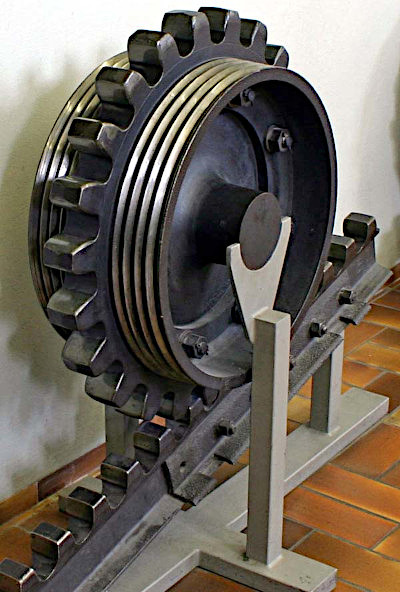
Invented by Swiss engineer Emil Strub in 1896.
Uses a rolled flat-bottom rail with rack teeth machined into the head approximately 100 mm (3.9ins) apart.
Safety jaws fitted to locomotive engage with underside of head to prevent derailments and serve as brake.
Strub is simplest rack system to maintain and has become increasingly popular.
Used by Jungfrau Railway.
Lamella (von Roll) System (1900's)
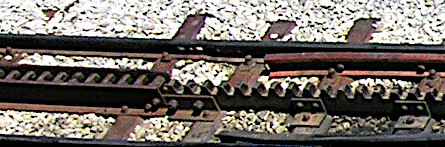
Riggenbach rack section on the left with lamella rack section on the right.
Lamella system (also known as Von Roll system) was developed by Von Roll company after rolled steel rails used in Strub system became unavailable.
It is formed from single blade cut in similar fashion to Abt system, but typically wider than a single Abt bar.
Lamella rack can also be used by locomotives designed for use on Riggenbach or Strub systems.
Most of the rack railways built from the late 20th century onwards have used Lamella system.