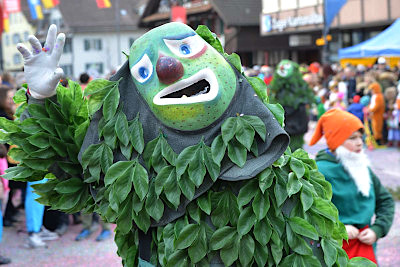
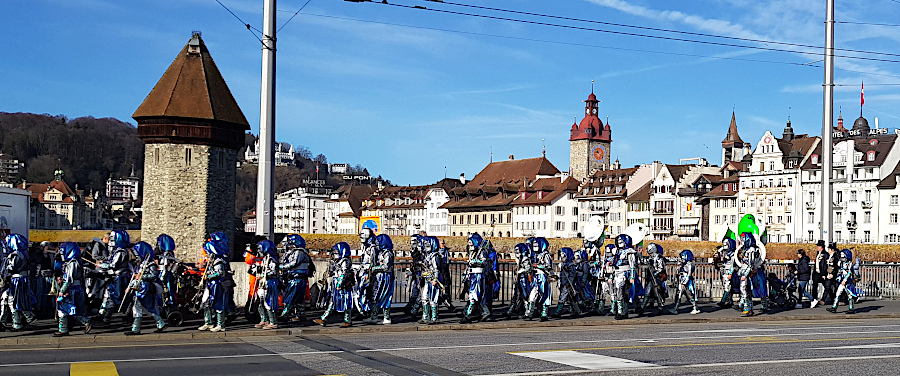
Fassnacht runs over 6 days, usually in February or early March, in other words at the end of Winter, starting on “Schmutzige Donnschtig” (Thursday before Rose Monday) and ending at midnight on the following Tuesday just before Ash Wednesday begins.
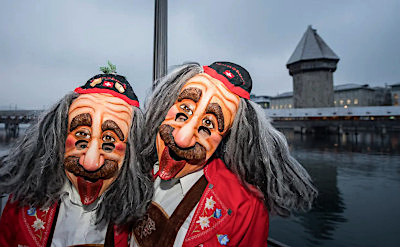
According to legend, the spirits of the dead lurk around every corner at this time of year. They are frightened away by a grand parade and celebrations that include music, marching, revelry, masks, costumes and copious cups of Kaffee Träsch, a Swiss liqueur and coffee combo to help fight off the cold.
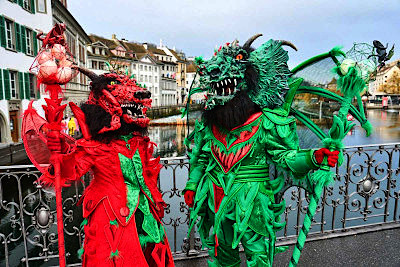
Local Fasnacht clubs start preparing months in advance based on their chosen theme for the year; traditionally preparations begin at 11 am on the 11th day of the 11th month, but many start well before then. Elaborate costumes and music routines are prepared. Band members assemble and performances are rehearsed until they are perfect.
Competition is fierce to outdo the other teams. They work ceaselessly to be bigger and more elaborate and over-the-top than they were the previous year. Great quantities of raffia, papier-mâché and other craft paraphernalia are used.
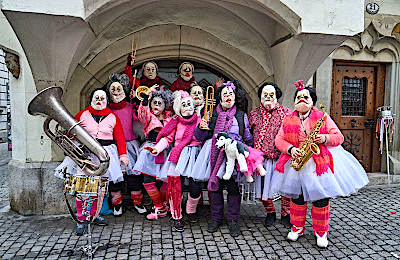
It is an occasion for people to dress up in outlandish costumes and masks, to cross-dress and flirt with others, or generally to let their hair down and have a good time.
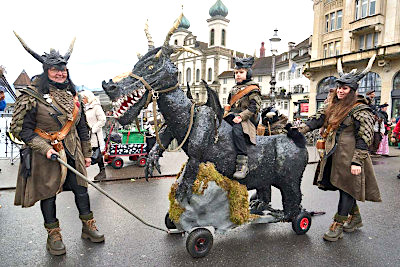
Costumes are usually home made and family and friends get together to make matching costumes.
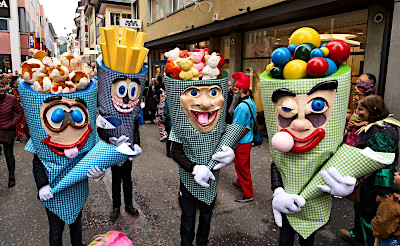
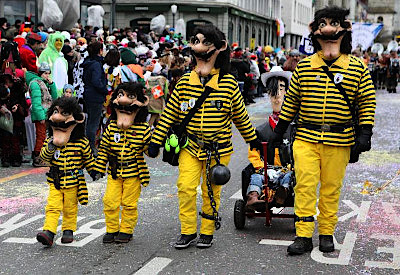
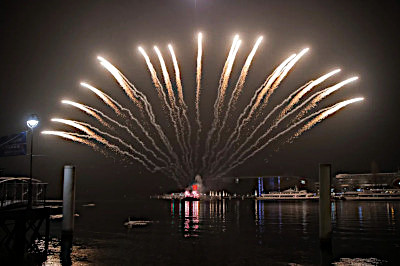
Festivities begin on 'Schmützige Donnerstag' (Dirty Thursday) with a 5 am canon-shot (“Urknall”) and big bang fireworks signaling to carnival revellers and Guggen-music bands that Fasnacht has begun - a riotous onslaught of sound, sight and celebration follows.
The 'Fritschi Father & his family' are the Patrons of the carnival.


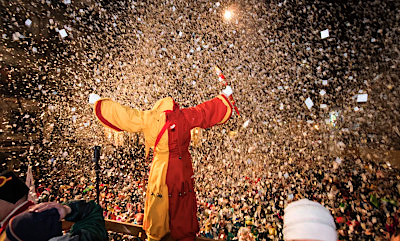
In Kapellplatz at the Fritschi Fountain thousands of revellers gather for the "Fötzeliregen" (confetti rain) - bags of large confetti made from old telephone directories are exploded over the crowds.

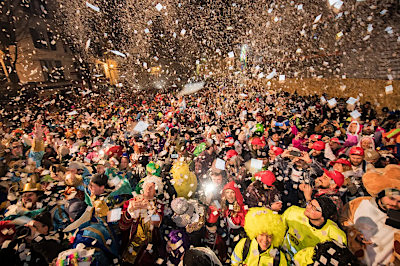
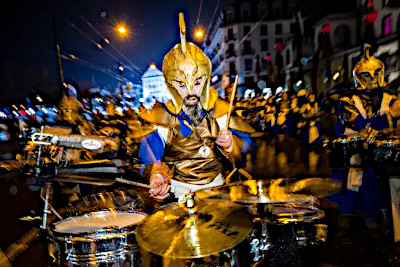
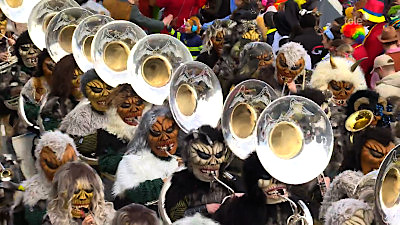
Then the Guggenmusic bands parade - making as much cacophany as possible to chase away any lingering winter spirits
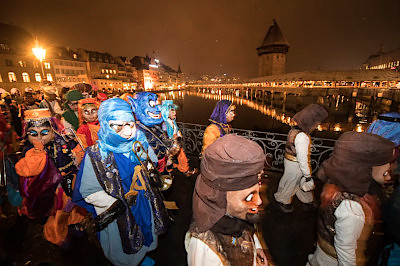
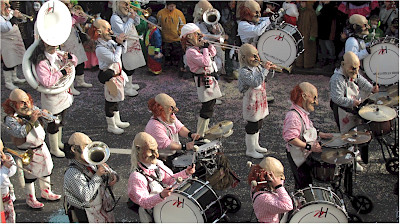
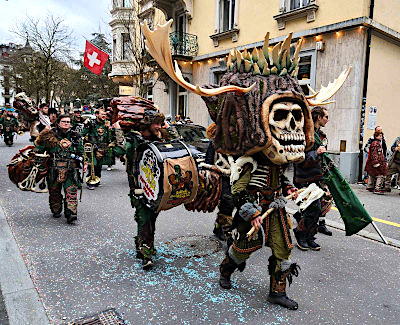
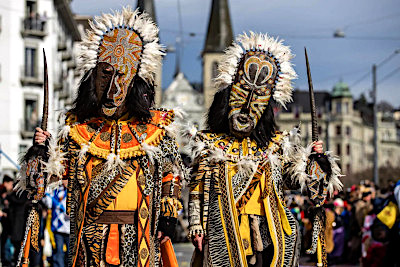
The “politically incorrect” or “cultural appropriation” is tolerated during the days of Carnival ...
Parades
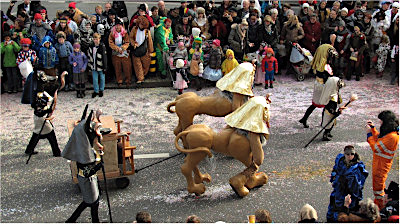
During the Thursday afternoon the first parade of floats built by the Guggenmusic bands trundle through the town from the Hofkirche along the lake and over the Seebrücke up to the Neustadt.
The themes of the floats cover satirical takes on current events of a political and social nature as well as increasingly fantasy subjects, where the craftsmanship involved in constructing the float and the masks ("Grende") is the main focus.
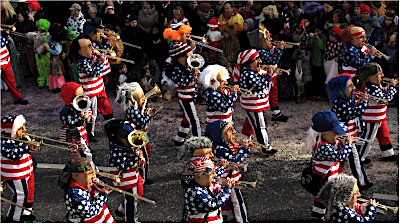
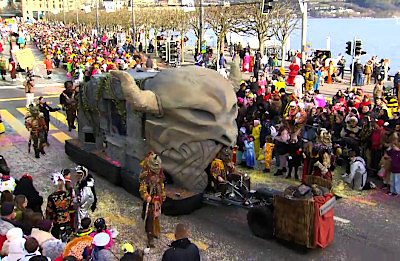
On the following Monday "Güdis-Mäntig" (Rose Monday) comes the second parade of floats. The name Güdis comes from Güdel meaning belly or paunch; in other words people fill their stomachs again on Güdis Monday and Tuesday before Lent begins on Ash Wednesday.

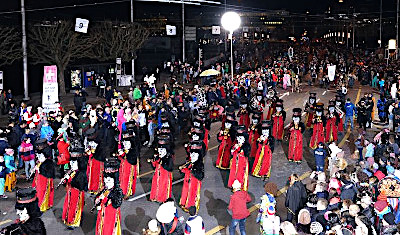
The spectators in the streets are also dressed in fanciful costumes.
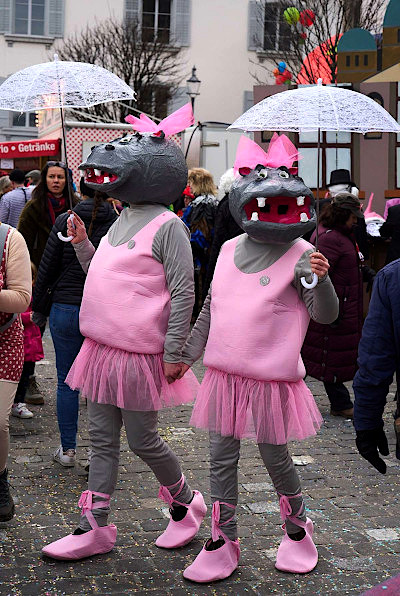

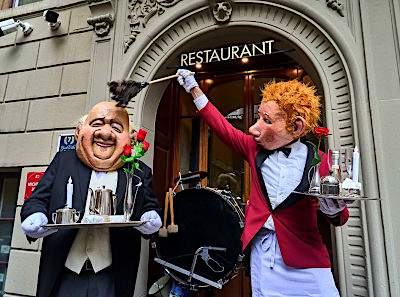
Costumes are elaborate with much attention to detail and a lot of humour
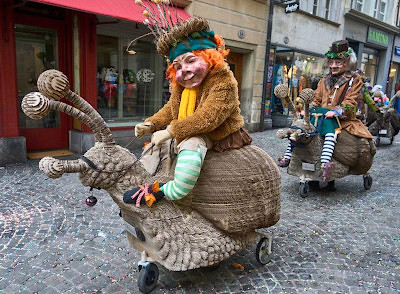
Monstercorso
The highlight of the carnival is the "Monstercorso" on the following Güdisdienstag (Tuesday) evening when over 100 Guuggenmusic bands parade across the bridge and through the old town, all playing their Guggen music. The order of procession of bands is determined by the year of founding of the band, the older the band the closer to the front of the parade it walks. The carnival ends with the beginning of Lent, Ash Wednesday ("Äschemettwoch").
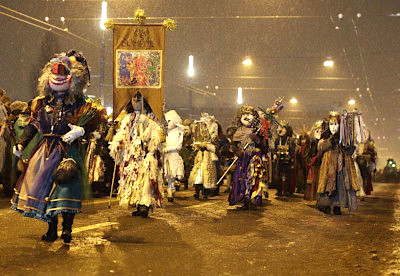
On Tuesday, the last night of Fasnacht, many participants, some of whom are still half-clothed in their costumes, fall into bed with absolute exhaustion. On Wednesday they awake as normal, well-behaved Swiss that they were before it all began. The planning begins anew, excitement builds and the next Fasnacht awaits.