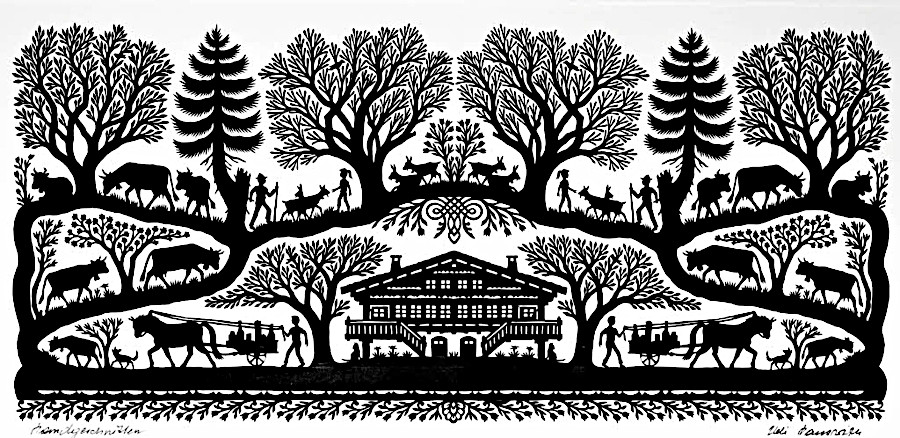
Scherenschnitt
The history of paper cutting began at least 2000 years ago in China where it is still practiced today. It only reached Central Europe much later via Indonesia, Persia and the Balkans.
The first European silhouettes are thought to date back to the 15th or 16th century. At that time, it was mainly women from the upper classes or nuns in cloisters who devoted themselves to the art and mainly cut portraits, religious subjects, love or friendship letters.
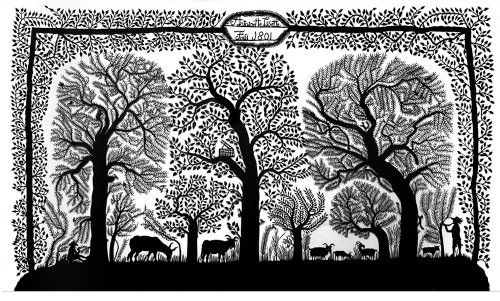
Historical paper cut - Herd under the trees 1801 by Antoinette Lisette Fäsi
They became popular in rural areas. The first paper cut, which is still considered typically Swiss, appeared in the mid-19th century and depicts an alpine parade in the Simmental valley
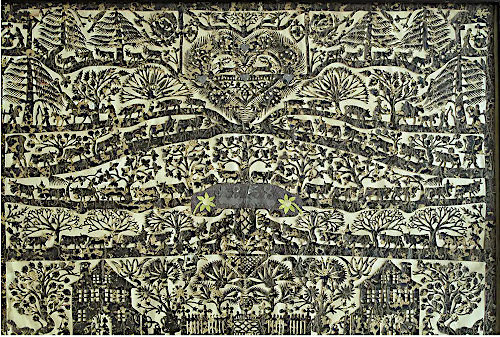
Alp Procession 1858 by Johann Jakob Hauswirth
It was created by Johann Jakob Hauswirth (1809-1871) considered the father of traditional Swiss paper cutting. He was a simple day labourer from the Bernese Oberland who went from village to village looking for work. Using whatever scraps he could find - bits of wallpaper, sweet wrappers - he cut paper to depict local scenes and gave them as gifts to those who fed and housed him.
In doing so, he established a tradition that is still alive today.

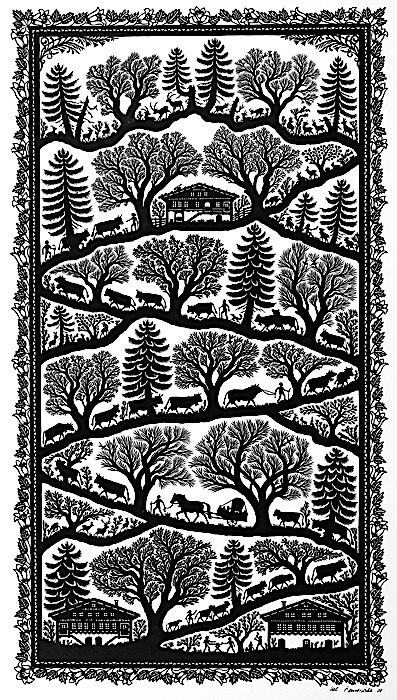
Contemporary paper-cut - Alp Procession by Rita Hochuli-Klauser, 2012
The region around the Saanenland, Simmental and Pays-d'Enhaut is still known for its great paper-cutting tradition: The Musée du Pays-d'Enhaut in Château-d'Œx houses, among other things, the Scherenschnitt Centre (Silhouette Center) with the collection of the Verein Scherenschnitt Schweiz (Swiss Silhouette Association).
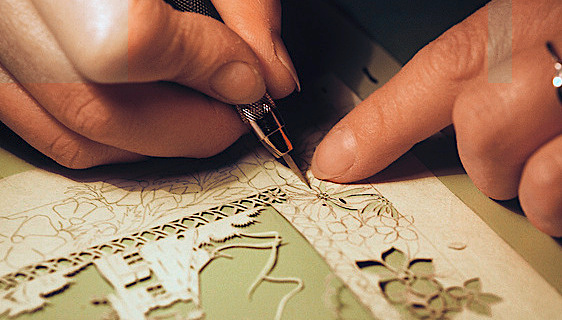
Today there are around 200 to 300 people (both men and women) active in paper cutting in Switzerland, with around 100 regularly exhibiting. Most are hobbyists using traditional styles and Alpine themes although many proponents are trying to push the boundaries and putting their own individual stamp on their work - eg. in the Alpine cow processions the subjects are always the same, so sometimes a cutter will put in a helicopter transporting an ill cow, or tractors.
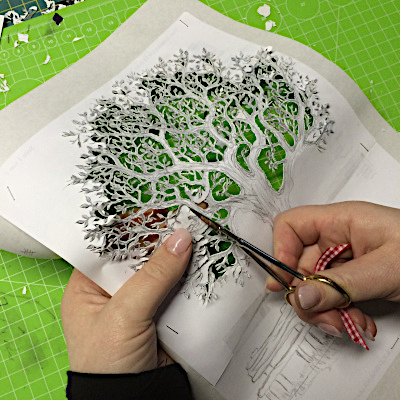
Paper cutting is also in the USA Catherine Winkler Rayroud is a Swiss paper cutter based in Texas, USA. Her pieces featuring modern issues – like a bra-shaped cutting depicting women’s struggle between their aspirations and role as caregivers – are very popular and have won prizes and awards.
Winkler uses tiny curved nail scissors she buys in the Migros supermarket when she is back in Switzerland. She says there is a lively paper cutting scene in the US, that includes other paper cutting traditions, such as Asian (its origin), Jewish, Polish and Mexican Papel Picado (often cut with a hammer and a chisel).
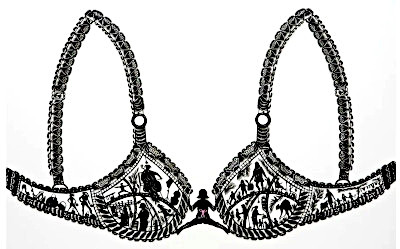
Catherine Winkler Rayroud: Women's Liberation? What liberation?
But is it Art?
One major difference between Switzerland and the US - in the US paper cutting is considered contemporary art; but not in Switzerland, where it is still seen more as a folk art & craft that holds great significance in people’s lives and culture. Up to 100 hours a month can be spent on a single piece.
But paper cutting remains collectable, and some of the biggest collectors are foreigners residing in Switzerland.
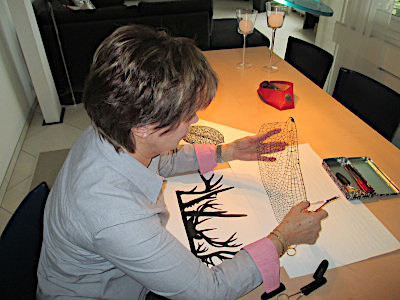
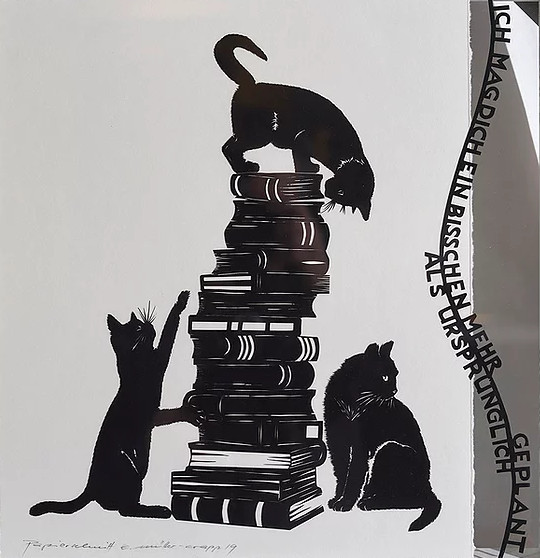
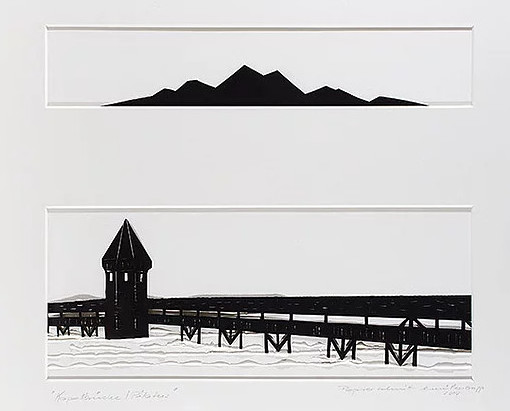
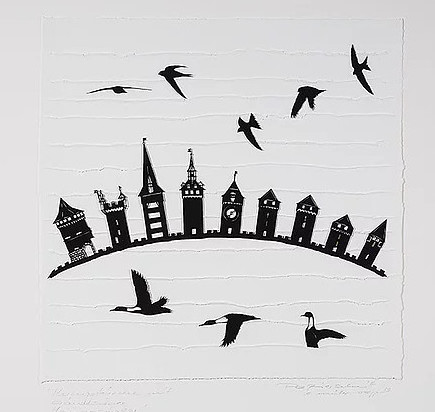
Here is Edith Muller-Crapp, a paper-cut artist who lives and creates in Meggen, the village where we live, with some examples of her contemporary Scherenschnitt (paper cut) creations.