
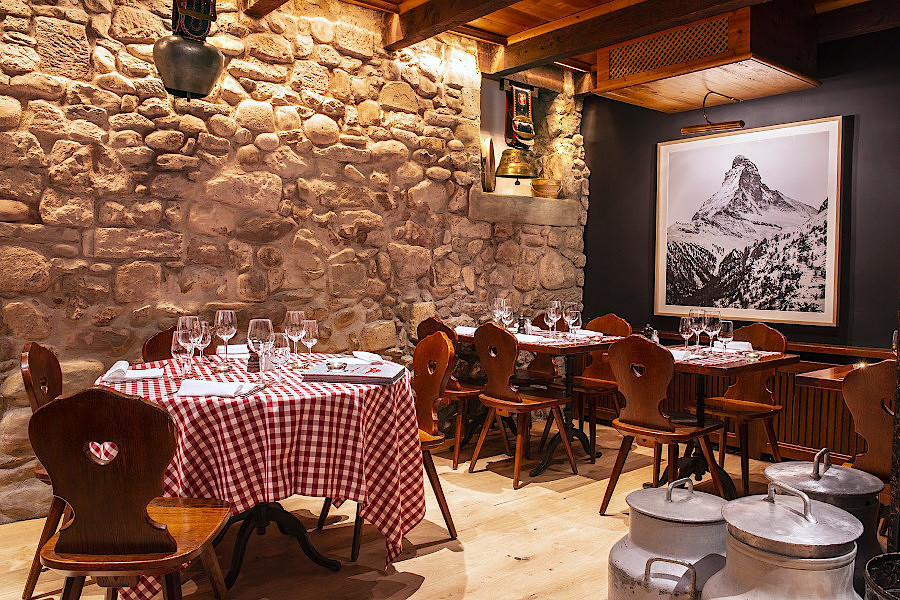
In Switzerland there are many regional specialities with cross-border links to neighboring countries - Germany, Austria, Italy, France - combined with additional ingredients brought by waves of immigrants, such as Risotto and Pasta brought by Italian immigrants.
Switzerland has never had a King or Queen or any Royal Court to set culinary standards. For centuries the country was just a poor mountaineous backwater and the modest dishes that developed were derived from what the people could gather in the fields and forests, what crops they cultivated and the animals they raised.
The predominent ingredients of all Swiss dishes include:
Bread - Potatoes - Milk - Butter - Cheese - Eggs - Bacon, Sausages and local Fruits (apples; pears; apricots; cherries)
You cannot say you have been to Switzerland until you have tasted at least some of these traditional foods and drinks during your travels through the country.
Birchermüesli
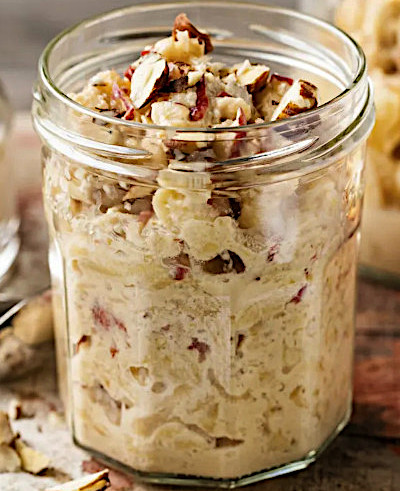
Birchermüesli was created in the early 1900s by the Swiss doctor Maximilian Oskar Bircher-Brenner as an easy-to-eat nourishing meal for his sickly patients.
The dish consisted of oat flakes mixed with milk, yoghurt, grated apple, hazelnuts and almonds and left in the fridge overnight.
It was later freeze-dried to become the world-known “Muesli” breakfast food.
In Switzerland Birchermüesli is eaten at any time of the day or night.
Rösti (pronounced “Rershtee”)
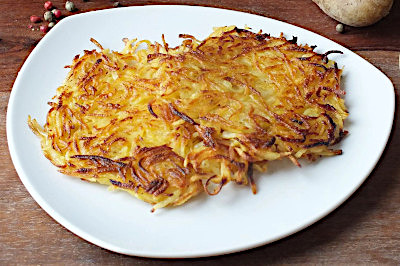
Rösti is a classic, iconic dish that consists of a base of grated potatoes fried like a pancake. It can be served plain or combined with any topping you like - cheese, onions, mushrooms, egg ...
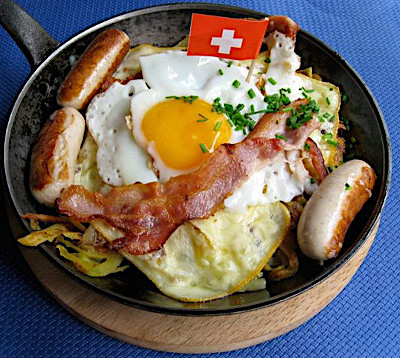
The dish originated in the German-speaking region and has become the unofficial national dish of the Swiss-German regions. Originally it was a breakfast meal commonly eaten by farmers.
The “Röstigrabe” or Rösti ditch is considered the dividing line between the Swiss-German and the French-speaking areas.
Cervelat - the “workers' steak” or the “Nation's Sausage”
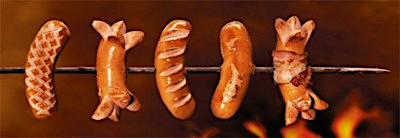
Contains "waste cuts" of finely minced and smoked beef, pork, bacon, salt and spices packed in a bovine intestine casing and then cooked by boiling.
Served hot with Rösti, or cold in a salad, or accompanied by plain bread chunks and mustard.
Cervelats became popular during the time of rapid industrialisation; they gave factory workers an opportunity to get animal-based proteins despite their low wages.
Around 160 million cervelats are consumed each year in Switzerland!
Zopf
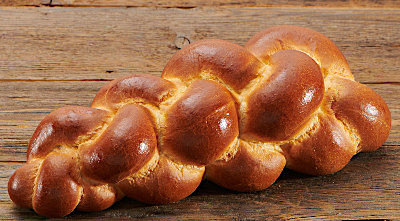
In Switzerland there are over 200 breads with 22 specific regional specialties.
Zopf is traditionally eaten on Sunday mornings all over the country. The bread is made from white flour, eggs, butter, milk and yeast, and plaited to give its distinct shape. Before baking the dough is brushed with egg or milk to give a golden crust.
Rivella
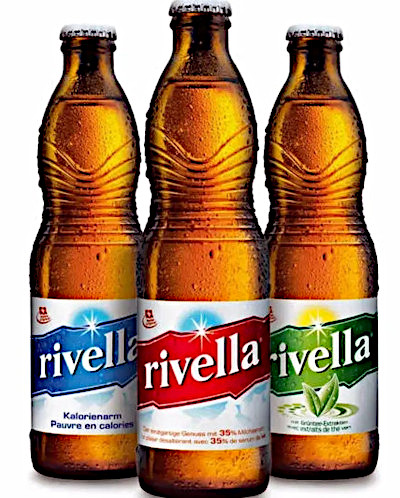
The national soft drink of Switzerland - made from milk.
First produced in 1952 to make use of a by-product from the cheese industry that was usually put into pig-swill.
Whey is filtered, sweetened either with sugar (red label) or artificial sweetner (blue label), flavored with herbal and green tea (green label) and carbonated.
On average, a Swiss person drinks 10 litres of Rivella every year.
Specialities of Central Switzerland
Älplermagronen Macaroni-cheese Alpine-style
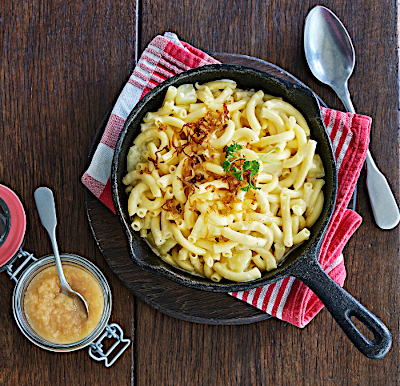
A simple filling dish developed to feed the hungry herdsmen looking after the animals on the mountain pastures.
Basic ingredients are macaroni, potatoes, cheese, cream and fried onions; can also add bacon or ham.
There are many variations of this dish, but all must include a side-dish of stewed apples or apple purée.
Luzerner Chügelipastete (only in Lucerne)
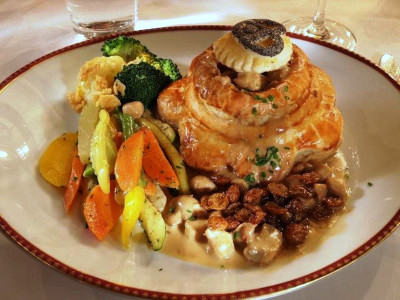
A vol-au-vent (flaky pastry) filled with balls of sausage-meat and mushrooms in a white sauce; often served accompanied by sultanas soaked in brandy.
Stews of all kinds are favorite dishes.
Stunggis
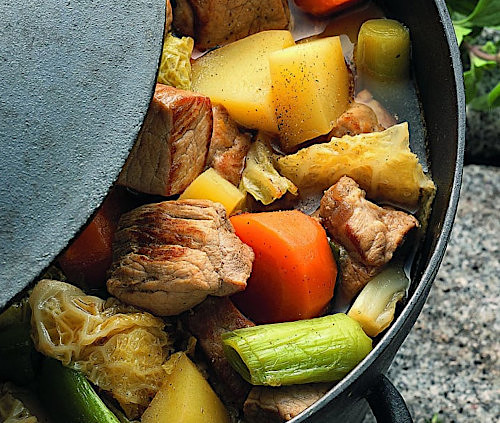
a traditional Swiss stew originating from Canton Nidwalden (neighbor canton to Lucerne).
The stew is usually made with a combination of pork neck, onions, cabbage, leeks, carrots, celery, stock, potatoes, salt, pepper, nutmeg, thyme, and marjoram. The meat and vegetables are sautéed in oil, then deglazed with the stock and mixed with spices and herbs.
The stew is simmered over low heat for some hours; potatoes are added near the end of cooking. Once everything is tender, Stunggis is served hot, preferably with bread on the side for mopping up the juices.
Züri Gschnätzlets - Veal Zürich-style
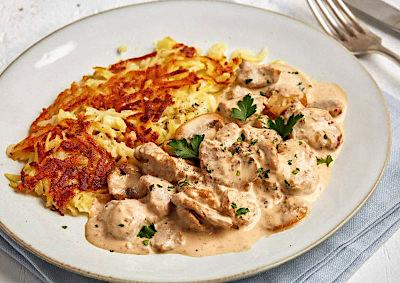
A dish of thinly-sliced veal strips quickly seared in butter, then cooked with chopped onions and mushrooms, white wine and cream; traditionally served with Rösti.
Cheese speciality from Central Switzerland
Sbrinz
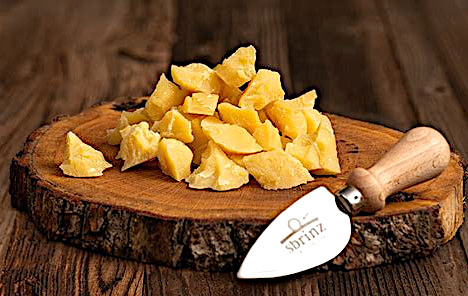
An extra-hard, full fat cheese made of raw milk, produced only in the Central Swiss cantons of Lucerne, Schwyz, Obwalden and Nidwalden.
A wheel of Sbrinz weighs between 25 and 45 kilograms.
This cheese is „blind“, i.e. it doesn't have any holes, and is slightly brittle which makes it particularly suitable for grating. Its flavour is a little salty and full-bodied.
See also Swiss CheesesSweet delicacies from Central Switzerland
Zuger Kirschtort
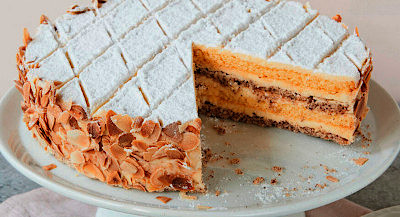
A cake made with a biscuit centre soaked in kirsch (cherry schnapps) and placed between two thin layers of shortbread that sandwich layers of butter cream laced with kirsch. Butter cream is also spread over the top and sides or the cake.
The Kirschtorte is delicate, creamy and crunchy with the flavour of kirsch and butter cream dominating.
Hüppen
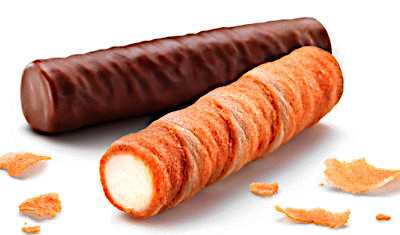
Wafer-like biscuits rolled into a tube shape and usually filled with a chocolate or creme mixture.
Specialities of Ticino (Italian-speaking area)
Risotto

There is hardly a restaurant in Ticino that does not serve a home-made risotto. And hardly a Ticinese who will not philosophise for hours about which rice variety, which white wine and what cooking time are the only “right” ones.
Osso buco (“bone with a hole”)

Made from braised veal shanks slow-cooked in broth and white wine and vegetables. Usually served with risotto.
Amaretti

Delicious small cookies made of whipped egg-white, sugar, ground almonds and/or apricot kernels. They rise a lot during baking and turn into airy and crunchy biscuits.
Gazosa
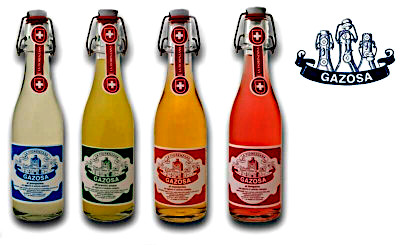
a clear, non-alcoholic, sweetened carbonated drink - originally made from lemons into a lemonade but now also made from mandarines and oranges.
Specialities of Graubünden
Pizokels
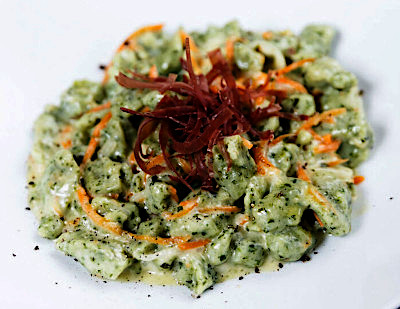
Spinach dumplings in a cheesy sauce with shavings of air-dried beef
Capuns
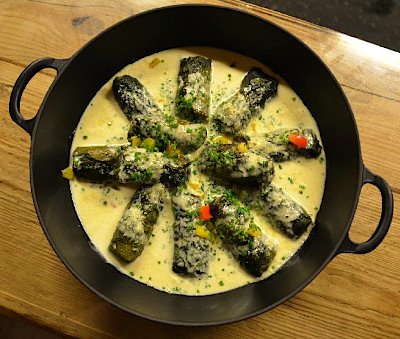
Rolls of Swiss chard filled with Spätzle dough covered with a cheese sauce.
Bündner Gerstensuppe
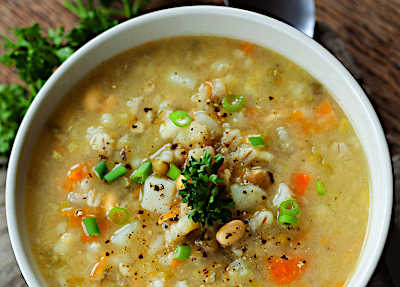
Locally-grown barley soup with vegetables.
Bündnerfleisch (Grisons dried beef)
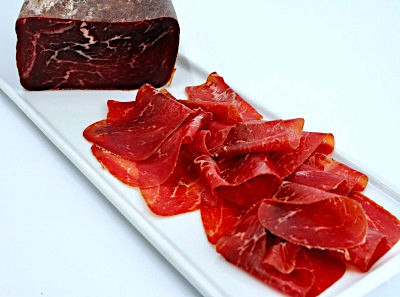
Prime beef air-dried and sliced paper-thin; usually rectangular with a firm consistency and a deep red colour in the centre.
Often strips of Bündnerfleisch are used as additions to soups and many other dishes.
Bündner Nusstorte
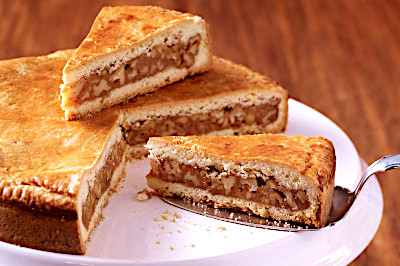
Nut tart from Graubunden - a short crust tart with a hazel nut filling, not to be confused with the nore upmarket Engadiner Torte.
Engadiner Torte
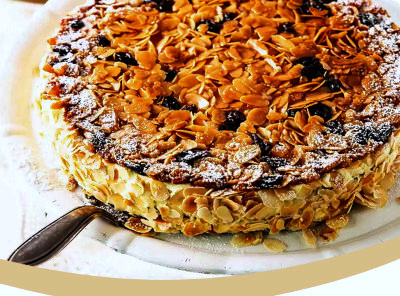
A combination of shortcrust pastry, vanilla buttercream and a topping of Florentine decoration.
Originally created by a chef in Pontresina as an upmarket pastry for the wealthy guests who started flocking to the Engadine from the 1860s onwards as he felt the Bündner nut tart was too plain and unexciting.
Specialities of the French-speaking area
Papet vaudois
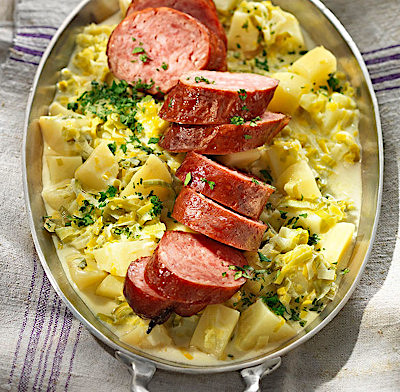
Made from potatoes, leeks and a tasty pork-and-cabbage sausage - the favourite dish of residents of the Lake Geneva Region.
According to legend, this delicacy was created in the village of Orbe more than 1000 years ago. The locals had insufficient meat to feed a powerful chief and his entourage who were passing through, so they added cabbage to the sausages to make the meat go further. The chief was impressed – and the villagers had created a unique dish.
Cholera from Canton Valais
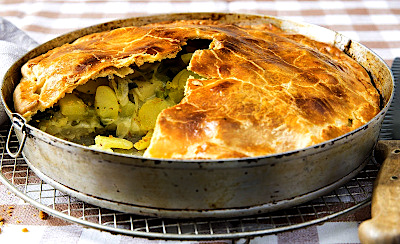
A delicious vegetable pie filled with potatoes, onion, leeks, pears (or apples) and cheese.
The dish owes its name to the fact that it was created by people having to use whatever food was left in their storerooms while they were quarantined during a disastrous cholera epidemic in the 1830s.
For a delicious Cholera recipe - see here
Some interesting Swiss-related foody-anecdotes
It was a Swiss chef to a Pope during the Middle Ages who first introduced the crucial concept of timing for each stage in the cooking process.
He would specify how many Pater Nosters or Hail Marys had to be recited between each stage in the cooking process. This allowed recipes to be written down and reproduced, modified and passed around.
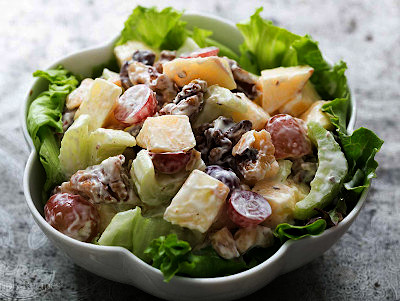
Waldorf Salad - created by a Swiss
Oscar Tschirky from La Chaux de Fonds was Maitre-d’hotel at the Waldorf Hotel in New York.
He is credited with creating the famous “Waldorf Salad” and “Chicken Waldorf”, the 1000 Island dressing and Eggs Benedict although he himself was never a chef!
Henry Haller - Swiss chef to 5 US Presidents

Henry Haller (1923-2020) was a Swiss chef, born in Altdorf, who trained at the Hotel des Balances in Lucerne and later worked at the Grand Hotel Bürgenstock.
He emigrated to Canada where the owner of the Grand Hotel Bürgenstock had a hotel, and then later moved to the USA where he worked as a chef at a hotel where Lyndon Johnson stayed.
Johnson enjoyed his food very much, and after the Kennedy White House chef resigned over a clash of ideas with the new President regarding the cuisine served at the White House, Haller applied for the position of Presidential Chef.
He was successful and he remained as White House Executive Chef for 21 years during the tenures of 5 presidents 1966 to 1987.
He was capable of translating the ideas and tastes of all the various First Families into cooking styles enjoyed by them all. He catered at the weddings of various presidential daughters but his most challenging moment came at the signing of the Camp David Accords in 1978 when he had just 1 week to plan, prepare and cook a dinner for 1'300 people.
And then there is the national dish Fondue, and Swiss Cheeses and Swiss Breads, Swiss Wines and Beers - see separate info files on them ...
- Swiss breads
- Swiss cheeses
- How Swiss Cheese is made
- Fondue recipes
- History of cheese making
- Cheese ecosystems