
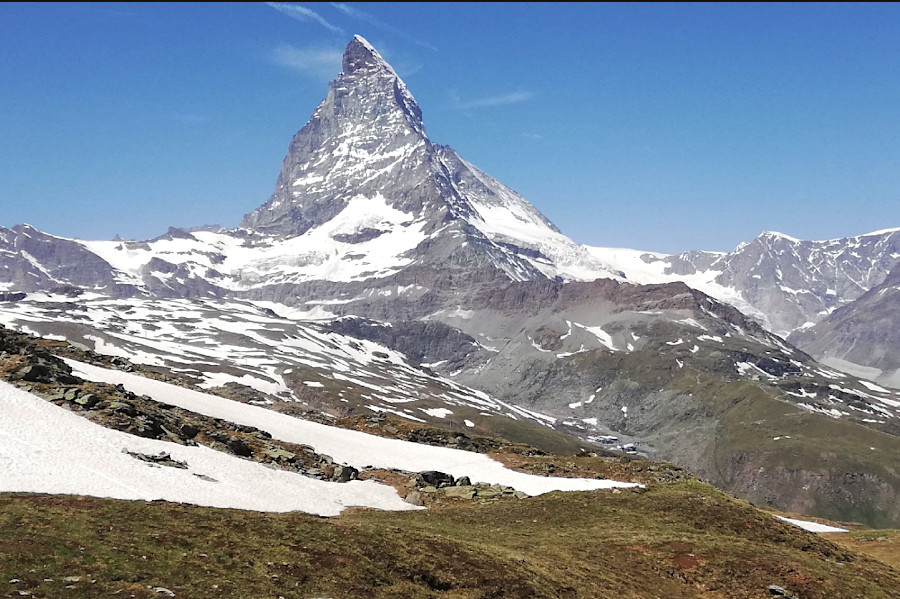


Matterhorn formation
As the Alps formed, sediment and volcanic rock of the former Tethys Sea was trapped under the African tectonic plate, metamorphosing into granites and gneisses.
They were pushed further and further north, coming to rest in the upper section of the mountain on top of much younger rocks at its base.
The first 3,400 m (11,150 ft) of the Matterhorn peak is a mix of sedimentary rock (chalk, limestone, shale) with mostly ocean crust from the long-gone Tethys Sea.
The summit of the Matterhorn—from 3,400 m up, is metamorphic rock that was pushed on top of the base when the African plate ran into Europe.
Most of the Matterhorn peak is hard, metamorphic gneiss, which is harder and older than the rocks that make up the base of the mountain.

Approx 220 million years ago
Supercontinent of Pangea begins to break up


Approx 190 - 120 million years ago
Opening of the Tethys Sea

Approx 100 million years ago
Subduction or "sinking" of the Tethys Sea

Approx 50 million years ago
'Collision' between European & African tectonic plates; European plate pushed under African plate
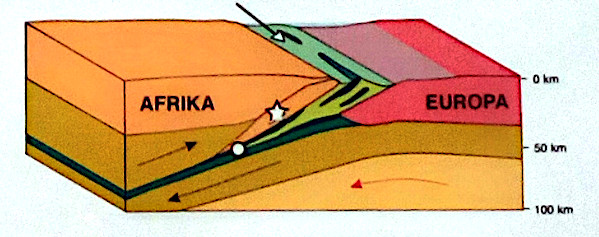
Approx 35 million years ago
Deformation & folding of the rocks
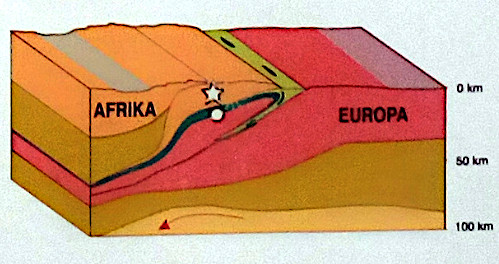
20,000 years ago to present times
Erosion by glaciers creates today's landscape

An iconic image

Tourism poster from 1908
Useful for marketers as shorthand for Swiss or 'quality'


Used even if there is no connection to the Matterhorn

and even by foreign politicians with a very questionable knowledge of geography ...

The shape of the Matterhorn developed more recently due to natural erosion over a period of about a million years. It started out as a relatively rounded mountain, but it's sides are covered by compacted ice and snow. During summer, some of the ice melts and seeps into the rock. When it freezes again in winter, it causes cracks where rock pieces flake off and over time this leads to the sharp flat faces of the mountain.
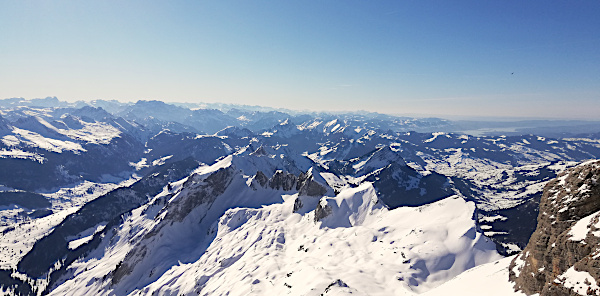
View of the Alps from the Matterhorn
See also
- Swiss mountains
- Monte Rosa Hut
- Bravo to the Lady Alpinists
- First Ascent of the Matterhorn - Triumph & Tragedy