
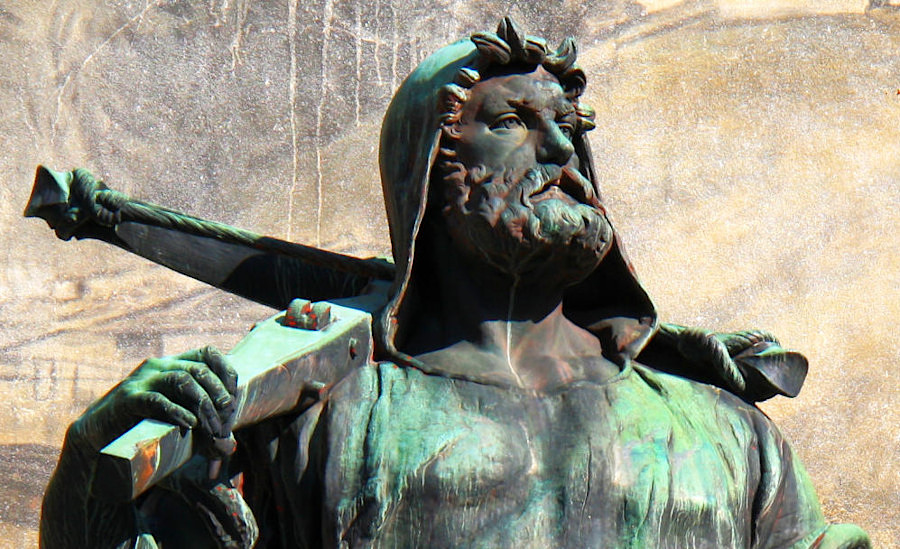
The background to the legend
In 1291, in response to the encroaching authority of the Habsburgs, a powerful family that dominated swathes of Europe at that time, the cantons of Uri, Schwyz and Unterwalden swore an oath of allegiance.
Committing themselves to the joint defence of the 3 cantons in the event of attack, they declared their independence in what became known as the Federal Charter. The signing of this document took place around 1 August, later chosen as Swiss National Day.
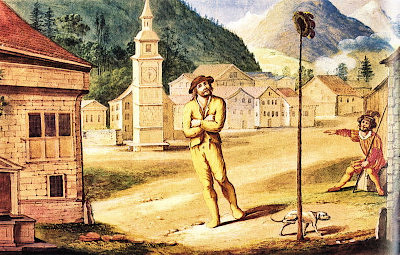
Threatened by this rebellion, the local Habsburg sheriff, Gessler, set out to persecute the local population. He stuck a pole with his hat on it in all the villages under his control. Anyone walking past was obliged to bow before it as a sign of submission and allegiance to him as representative of the Habsburgs.
This was the setting in which the legend of William Tell occurred.
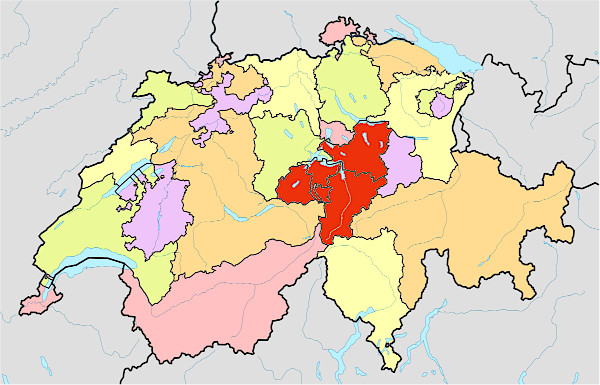
Map showing the cantons of Uri, Schwyz & Unterwalden (in red)
The Legend of William Tell
(also called Wilhelm Tell / Guillaume Tell / Guillermo Tell)
According to legend, one day in 1307, William Tell, from the village of Bürglen above Altdorf, ignored the prominently displayed hat in the Altdorf town square as he walked through the town, knowing that he was risking his life if his action was reported – which it swiftly was. The following day, Gessler summoned Tell.
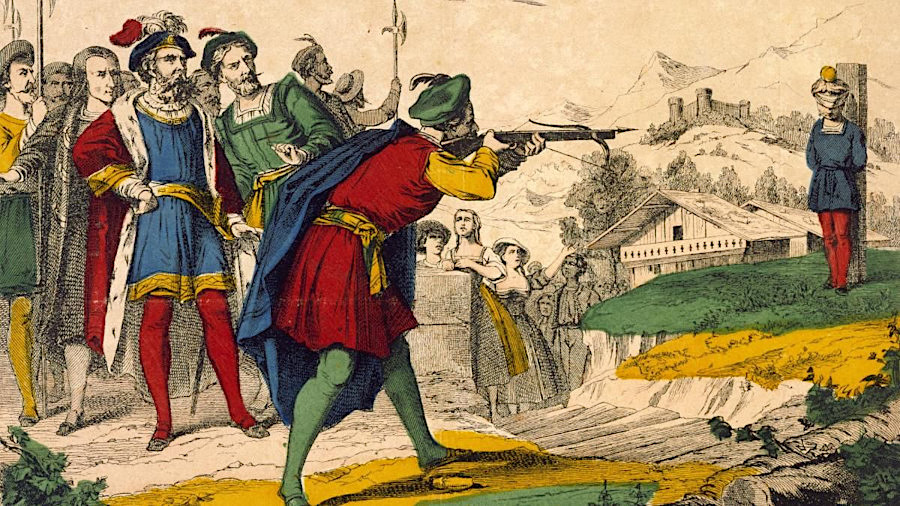
Gessler was not prepared to excuse Tell's defiance but made a show of generosity by offering him a way out of certain death knowing that he was a superb crossbow marksman. The test was to shoot an apple off his son's head.
Once the boy had been made to stand in place, Tell took out 2 bolts from his quiver. He aimed his crossbow and expertly hit the apple without harming a hair on his son's head.
Gessler was in awe of Tell's skills until he noticed the second crossbow bolt and demanded an explanation. Tell confessed that if his first arrow had missed and struck his son, he would have used the second one to shoot the tyrannical Gessler.
Full of rage, Gessler ordered Tell be arrested and locked away forever in a tower in Gessler's castle at Küssnacht.
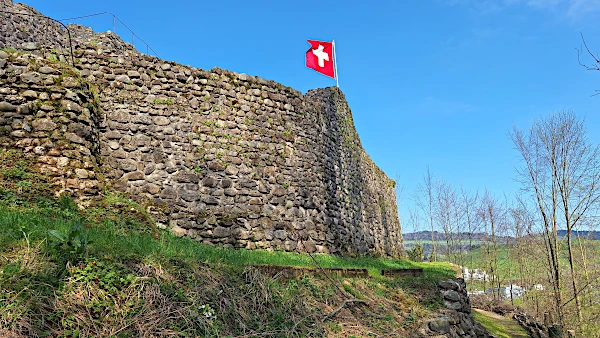
The ruins of Gesslerburg above Küssnacht
William Tell is arrested and put in chains. Gessler and his prisoner leave by boat on Lake Lucerne heading for his castle at Küssnacht, but a storm due to warm winds from the south (not unusual in the region) brings the boatmen into distress. They let William Tell, who is more familiar with the lake, control the boat.
Tell steers the boat towards a small flat rock just under water level, grabs his crossbow, jumps off and pushes the boat back into the waves.
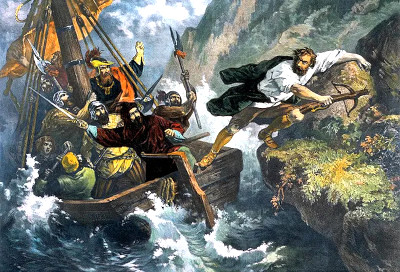
He knows the land well and swiftly goes over the mountain on foot to reach the 'Hohle Gasse' before Gessler arrives on horseback, having to go all the way around the mountain. Here Tell lies in wait for Gessler and then finally despatches the tyrannical sheriff with his second crossbow bolt.
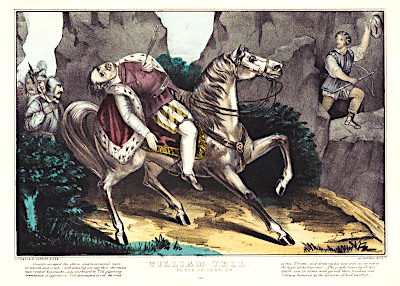
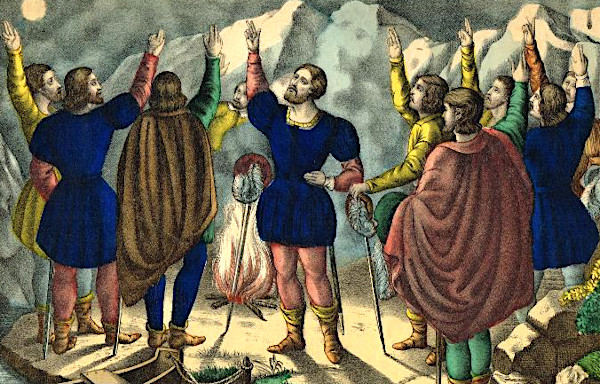
This act of heroism in the quest for Freedom is celebrated through the 3 cantons. The confederates meet at the Rütli meadow to re-affirm their pact …. so creating the beginnings of the country we know as Switzerland.
Myth or true story?
The legend's authenticity has been much debated. Despite the abundance of historical research on Tell, there is actually no documentary proof he existed in real life or that the events he is credited with even took place.
But that doesn't make the story any less compelling. William Tell is a symbol – a hero, a rebel, a freedom fighter, a terrorist, a murderer – depending on your point of view. Ultimately, the legend can be interpreted however you like – which is probably what has made it such a success for the past 700 years.
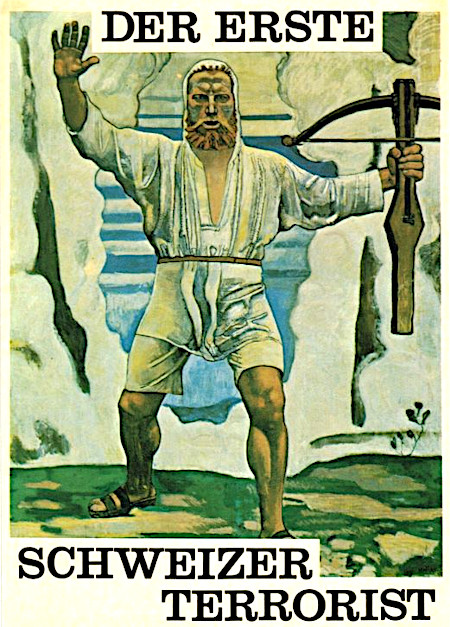
"The first Swiss terrorist" - postcard based on Ferdinand Hodler’s famous painting of Wilhelm Tell, 1897
For the Swiss in all the regions of the country, William Tell is a national hero who represents the people and respect for authority, but also the ability to fight that authority if it is unjust.
The significance of the legend
In 1848, after the short Sonderbundskrieg in 1847 (a nasty civil war), a new federal Constitution was drawn up creating a 'new' Swiss Confederation.
The 'new' country needed heroes to unite all parts that had previously been at war with each other; it needed heroes that people in all the regions and all the language groups could identify with and so create a new ‘national identity’.
By 1848 the story of William Tell was well known. He was seen by all as an iconic Hero, held up as the personification of Freedom and Bravery - a perfect hero for the 'new' Swiss Confederation.
As a symbol of Swiss resistance against foreign rule and tyranny, Tell has come to represent the core values of the Swiss people today – autonomy, independence, individual freedom, and self-determination.
His story has been adapted and re-interpreted in a variety of ways over the centuries, which has helped to keep the story fresh and relevant to new generations.
Overall, the legend of William Tell has had a profound impact on Swiss culture and national identity, and it continues to inspire people around the world with its themes of resistance, freedom, and individual autonomy.
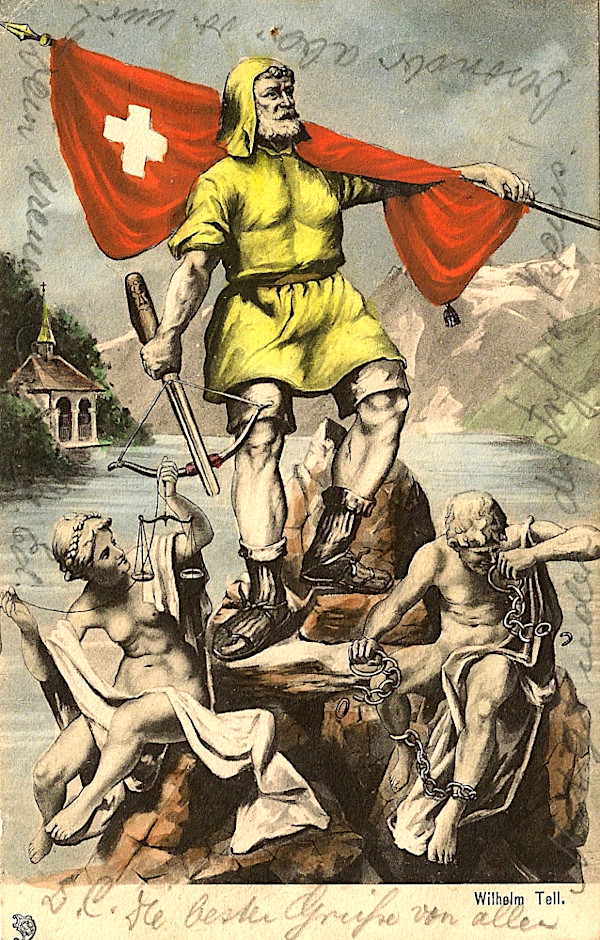
William Tell goes viral
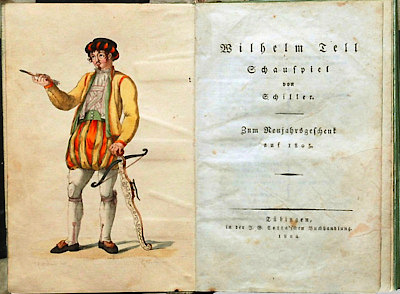
1804 - Tell became a household name thanks to Friedrich von Schiller's play 'Wilhelm Tell'.
By 1825 it had been translated into many languages.
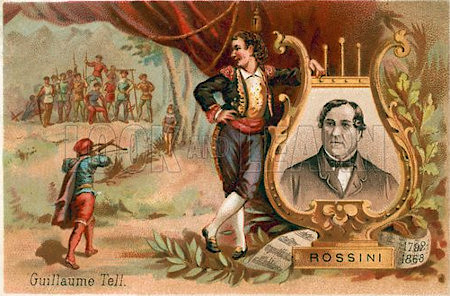
1829 - Rossini wrote the opera “William Tell” based on Schiller's play.
William Tell
(Guillaume Tell - Guillermo Tell):
a unifying symbol for Switzerland
Commemorated on stamps
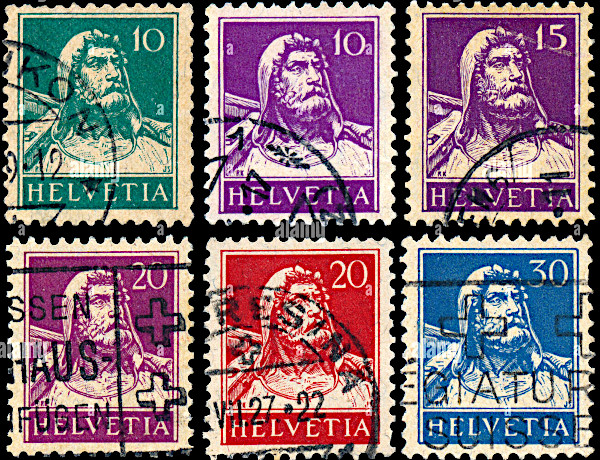
and on gold bars
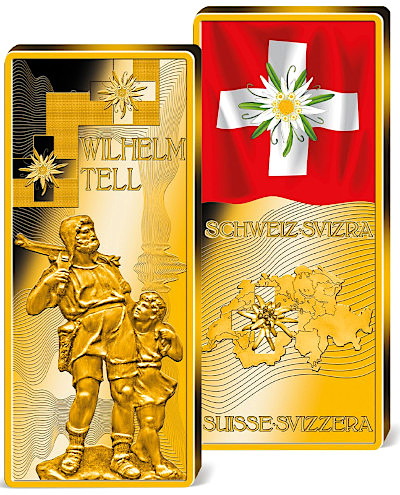
and with statues - especially in Altdorf where the story takes place.
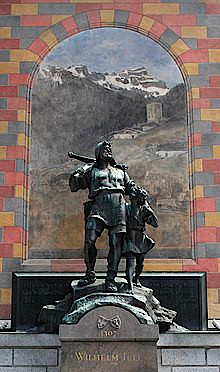
And in the USA - Outside the City Hall at Tell City, Indiana
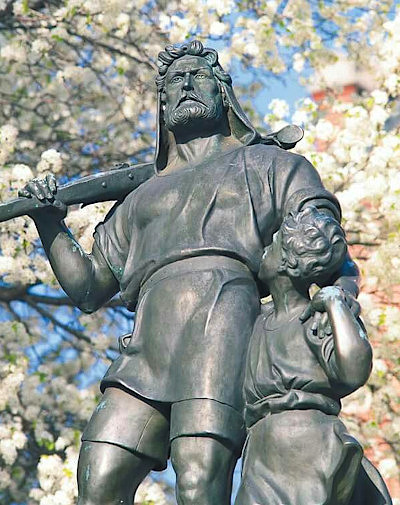
Terrorist or Freedom Fighter?
Criminal or Hero?

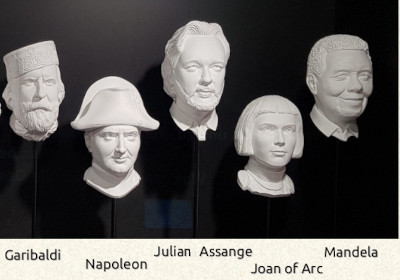
It all depends on your point of view ...